
Your Professional Booster Cable Manufacturer
Our Booster Cables are designed for reliable emergency jump-starts of cars, SUVs, trucks, motorcycles, and boats, featuring high-conductivity 100% oxygen-free copper cores for minimal power loss and stable current delivery, even in extreme temperatures (-40°F to 140°F). Equipped with flame-retardant, oil-resistant double-insulated PVC jackets and nickel-plated copper ergonomic clamps, they ensure safety against short circuits and sparking, while multiple gauge (00GA/0GA/1GA/2GA/4GA/6GA/8GA/10GA or 16mm²/25mm²/35mm²) and customize length options meet diverse needs. UL/GS certified, lightweight, and comes with a storage bag, they're ideal for daily commuters, road trippers, and mechanics to handle unexpected battery failures.
-
![CE-800AMP]() CE-800AMPItem: Booster CableSpec: 800A*2.8MMaterial: CCA, PVC-25℃Clamp: A18 copper plated clampMOQ: 1000pcs,(customer brand)
CE-800AMPItem: Booster CableSpec: 800A*2.8MMaterial: CCA, PVC-25℃Clamp: A18 copper plated clampMOQ: 1000pcs,(customer brand) -
![S4]() S4Short Description: Safety Booster Cable with Surge protector
S4Short Description: Safety Booster Cable with Surge protector -
![S6]() S6Short Description: Safety Booster Cable with Wrong Connection Indicator
S6Short Description: Safety Booster Cable with Wrong Connection Indicator -
![S7]() S7Short Description: Safety Booster Cable with Voltmeter
S7Short Description: Safety Booster Cable with Voltmeter -
![1000AMP]()
-
![700AMP]()
-
![400AMP]()
-
![200AMP]()
-
![CE-400AMP]() CE-400AMPItem: Booster Cable Spec: 400A*2.5MMaterial: CCA, TPR-45℃Clamp: A07 copper plated clampMOQ: 1000pcs,(customer brand)
CE-400AMPItem: Booster Cable Spec: 400A*2.5MMaterial: CCA, TPR-45℃Clamp: A07 copper plated clampMOQ: 1000pcs,(customer brand) -
![CE-300AMP]() CE-300AMPItem: Booster CableSpec: 300A*2.2MMaterial: CCA, TPR-45℃Clamp: A07 copper plated clampMOQ: 1000pcs,(customer brand)
CE-300AMPItem: Booster CableSpec: 300A*2.2MMaterial: CCA, TPR-45℃Clamp: A07 copper plated clampMOQ: 1000pcs,(customer brand) -
![CE-600AMP]() CE-600AMPItem: Booster Cable Spec: 600A*2.5MMaterial: CCA, PVC-25℃Clamp: A07-1 copper plated clampMOQ: 1000pcs,(customer brand)
CE-600AMPItem: Booster Cable Spec: 600A*2.5MMaterial: CCA, PVC-25℃Clamp: A07-1 copper plated clampMOQ: 1000pcs,(customer brand) -
![CE-200AMP]() CE-200AMPItem: Booster Cable Spec: 200A*2.2MMaterial: CCA, PVC-25℃Clamp: A16 copper plated clampMOQ: 1000pcs,(customer brand)
CE-200AMPItem: Booster Cable Spec: 200A*2.2MMaterial: CCA, PVC-25℃Clamp: A16 copper plated clampMOQ: 1000pcs,(customer brand)


Why Choose Us
High Quality
Specialized in car emergency tools industry over 20 years, strict quality control and factory management win customers' trust. Factory is certified ISO9001:2015,ISO14001:2015 and BSCI.
Safety
Your safety is our top priority. All products are tested when mass production and with safety certification according to different market requirement, GS,UL,CE,ETL,ROHS,PAHS,REACH and so on.
Professional Team
Great design and development team provide perfect support on new product development and package design. We can make OEM/ODM and package design for all customers.
24H Online Service
Our dedicated customer service team is available 24/7 to answer any questions and provide support.
|
Product description: Professional booster cable with UL certification,High-quality and more secure |
|||||
|
Material |
Spec(Ga) |
Lenght(Ft) |
Current(A) |
Temp Rating(C) |
Certification |
|
CCA |
10 |
10 |
125 |
-25 |
UL Listed |
|
CCA |
8 |
16 |
135 |
-25 |
UL Listed |
|
CCA |
8 |
14 |
150 |
-25 |
UL Listed |
|
CCA |
8 |
12 |
165 |
-25 |
UL Listed |
|
CCA |
6 |
20 |
160 |
-25 |
UL Listed |
|
CCA |
6 |
18 |
175 |
-25 |
UL Listed |
|
CCA |
6 |
16 |
250 |
-25 |
UL Listed |
|
CCA |
6 |
12 |
240 |
-25 |
UL Listed |
|
CCA |
4 |
25 |
200 |
-25 |
UL Listed |
|
CCA |
4 |
20 |
300 |
-25 |
UL Listed |
|
CCA |
4 |
16 |
295 |
-25 |
UL Listed |
|
CCA |
4 |
12 |
350 |
-25 |
UL Listed |
|
CCA |
2 |
25 |
290 |
-25 |
UL Listed |
|
CCA |
2 |
20 |
320 |
-25 |
UL Listed |
|
CCA |
2 |
16 |
350 |
-25 |
UL Listed |
Advantages of Booster Cable


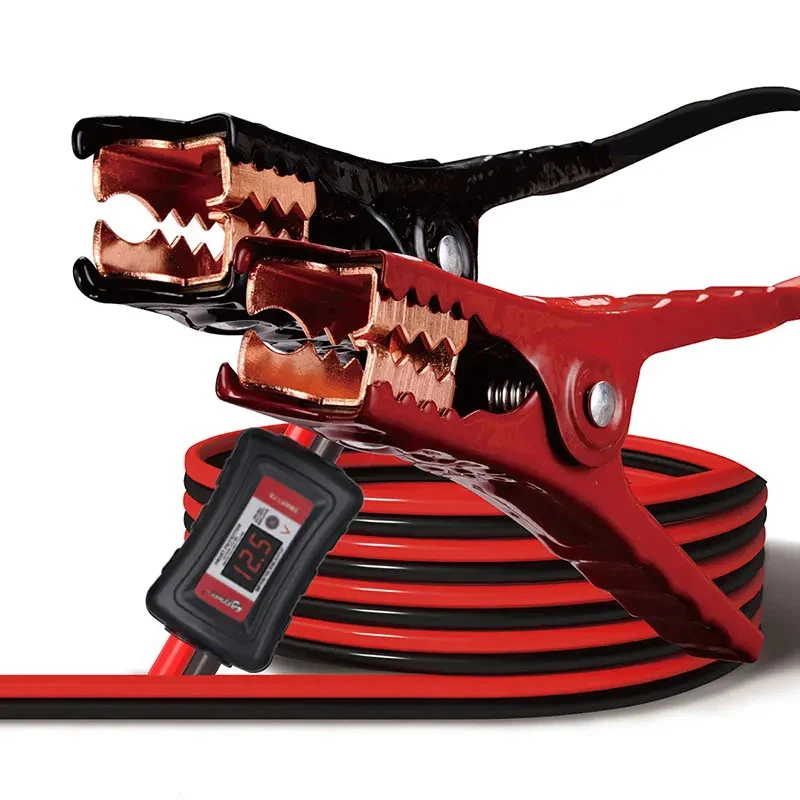
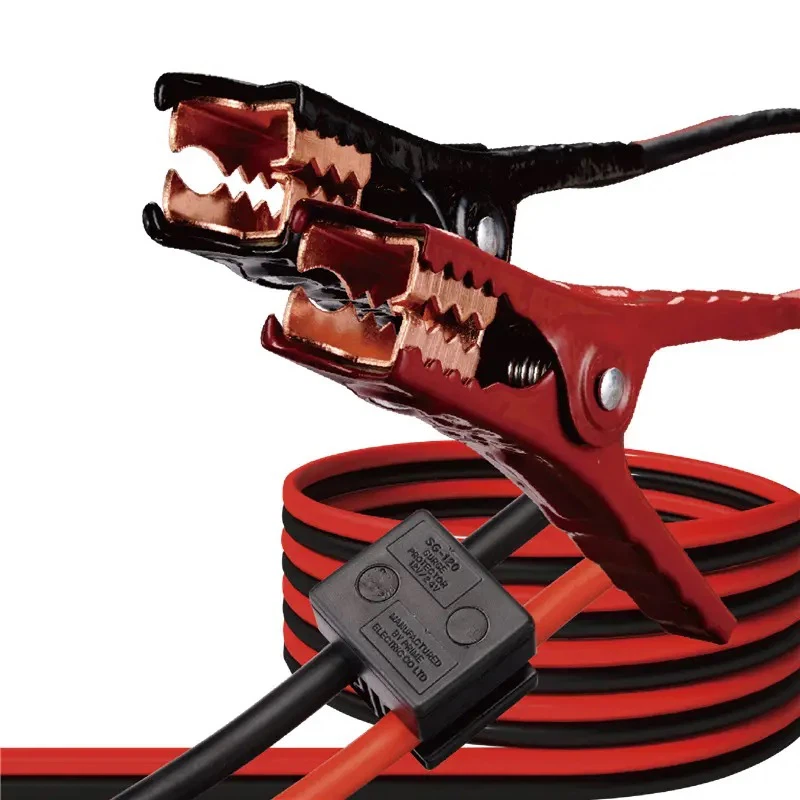
Maximum Current Rating: With a maximum current rating of 600 –1000 amps, booster cables enable faster jump starts without risking damage to batteries or electrical systems of involved vehicles.
Insulation and Durability: The insulation in booster cables is stronger and heat-resistant, thus providing better protection against wear as well as other environmental factors. They may also come with additional properties such as tangle-free construction or reinforced clamps which make them more durable throughout their use.
Simple and Reliable: The basic principle of transferring power from a good battery to a dead one is straightforward, making booster cables a reliable method for jump-starting.
Emergency Preparedness: Booster cables are a valuable addition to any vehicle's emergency kit, allowing drivers to handle a common roadside issue independently.
No need for Specialized Equipment: Unlike portable jump starters, booster cables don't require charging or maintenance, making them ready for use whenever needed.
Emergency Jump Starting: They can provide a quick solution to a dead battery, getting you back on the road faster than waiting for roadside assistance.
Types of Booster Cable
Standard Booster Cables
The most commonly used type of booster cables, these come in various gauge sizes that determine their thickness and current-carrying capacity (ampacity). Standard cables are ideal for everyday use by car owners and roadside assistance services.
Heavy-Duty Booster Cables
These cables feature lower gauge numbers, meaning they're thicker and capable of carrying higher currents. Designed for larger engines like those found in trucks, buses, and industrial machinery, they provide reliable performance even in demanding situations.
Lightweight Booster Cables
Designed with portability and ease of storage in mind, these cables are smaller and lighter than standard options. While convenient for emergency situations, they have limited ampacity and are best suited for occasional use.
Smart Booster Cables
Featuring built-in technology such as microprocessors, smart booster cables offer enhanced safety features. These include visual indicators, audible alerts for correct connections, and even battery diagnostics to prevent misuse and ensure safe operation.
Solar Booster Cables
Specifically designed for solar energy systems, these cables connect solar panels, charge controllers, and batteries. They are built to handle high currents and typically have a larger gauge than standard automotive jumper cables.
USB Booster Cables
Designed for low-power electronics and mini jump starters, USB booster cables allow users to connect portable battery packs to a vehicle’s onboard system or directly to the battery terminals for auxiliary starting.
Step-by-Step Guide to Connecting Booster Cable
Step 1: Connect the Positive (+) Cable
Start by connecting the red positive clamp to the positive battery post on the dead battery. Connect the other end to the positive battery post on the jumper battery in the working vehicle. Remember to always connect positive to positive.
Step 2: Connect the Negative (-) Cable
Connect the black negative clamp to the jumper battery in the working vehicle. Move to the nonworking vehicle and find a large, metal component in the engine compartment. Then, connect the final black negative clamp to the metal component. Connecting the negative clamp to the dead battery can lead to sparks flying, which is a fire risk.
Step 3: Start the Working Vehicle
With the cable connection complete, it's time to start the working vehicle. Allow it to idle for five to ten minutes.
Step 4: Start the Nonworking Vehicle
Start the nonworking vehicle. If you're still having difficulty getting the vehicle to start, you may need to let the idling vehicle charge the battery for a longer period of time. Once the vehicle with the dead battery has started, let it run for at least 30 minutes in order to give the alternator ample time to charge the battery.
Maintenance of Booster Cable
Regular Cleaning: Dirt, grease, and corrosion on the clamps can hinder electrical conductivity. Clean clamps periodically using a solution of baking soda and water to remove corrosion. Rinse thoroughly after cleaning and dry completely before storage.
Proper Storage: Store the cables loosely coiled in a protective case or bag to prevent kinks and internal wire breakage. Avoid tightly wrapping them around sharp edges or corners, which can cause stress fractures in the conductor strands over time.
Tangle Prevention: Always uncoil and coil the cables carefully to avoid knots and tangles. Keeping them organized ensures quicker deployment and reduces wear caused by forced unraveling.
Connection Inspection: Periodically check the integrity of the clamps and cable ends for signs of wear, melting, or fraying. Damaged cables should be replaced immediately to avoid failure during critical use.
Follow Manufacturer Instructions: Each set of booster cables may have specific usage guidelines based on its design and intended application. Adhering to these instructions ensures safe and optimal performance, particularly when dealing with different vehicle types or advanced electrical systems.
Packaging and Shipping

FAQ
Popular Products